
Share Robert Walter Gingery's obituary with others.
Invite friends and family to read the obituary and add memories.
Stay updated
We'll notify you when service details or new memories are added.
You're now following this obituary
We'll email you when there are updates.
Select your format and elements to print

IN LOVING MEMORY OF Robert Walter Gingery
Robert Walter
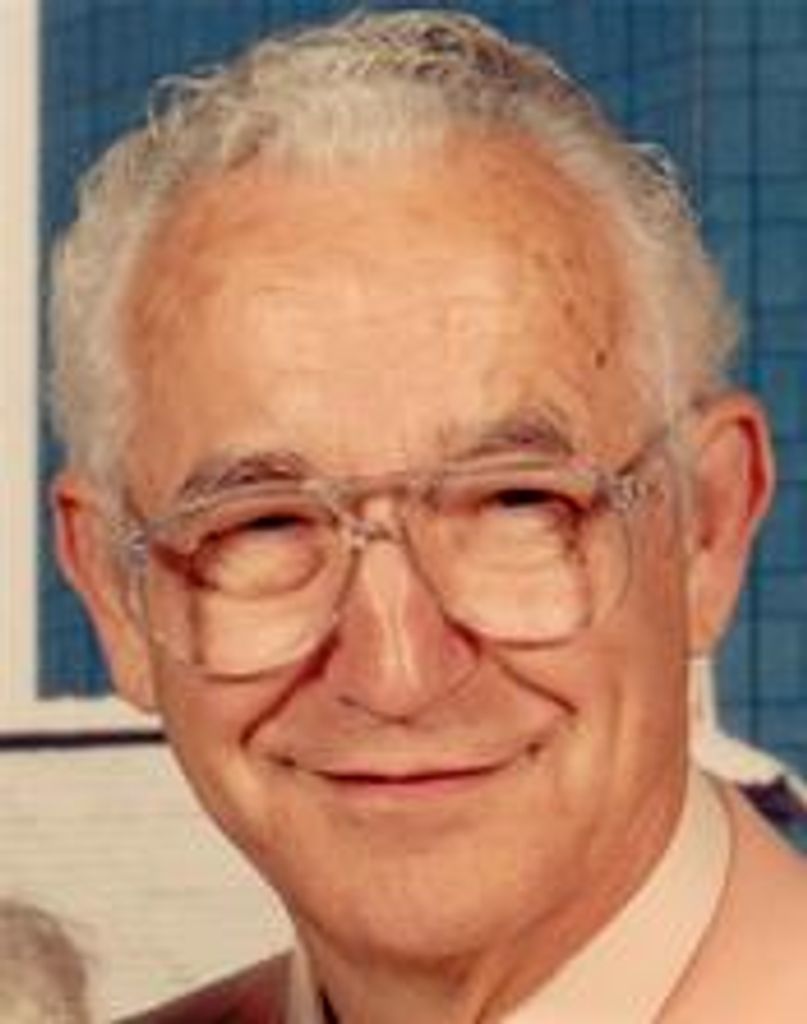
Gingery
Dec 15, 1919 — Oct 12, 2012
Robert Walter Gingery's Obituary
Robert Walter Gingery, former senior minister of the United Community Church (United Church of Christ) in Sun City Center, Florida, died on Friday, October 12, 2012 at the age of 92. In Sun City Center he will be remembered for his dedication to the work of his church, a dedication that kept him in the pulpit until his mid-seventies, his leadership in creating low-income housing in the community of Wimauma, his work with others to found the United Community College and his willingness to teach at that college until he was in his late eighties. His unique approach to his ministry in Sun City Center earned high praise from Pulitzer Prize-winning author, Francis Fitzgerald, in her book, Cities on a Hill. Dr. Gingery's work in Sun City Center was but the culmination of a lifetime of accomplishment. He was born in Indianapolis, Indiana, on December 15, 1919 to Walter and Clara Gingery. He graduated from George Washington High School in Indianapolis, an accomplishment he would later attribute to the fact that his father was the Principal at George Washington High School. He later graduated from Earlham College in Richmond, Indiana, and the Boston University School of Theology. After graduating from college and prior to entering seminary, he married Annis Elizabeth Baldwin of Kokomo, Indiana. In his first church, now the United Methodist Church of Edinburgh, Indiana, his ministry focused on meeting the needs of the soldiers of near-by Camp Atterbury, as they prepared to deploy to the front in the Second World War. In his second assignment, Weir Memorial Church in Salem, Indiana, he began fighting for Civil Rights in earnest, albeit somewhat inadvertently. Having taken a group of both white and black youths to a state park to go swimming, he was informed by the park personnel that the black children would have to swim at a separate beach. It may have been serendipity that Reverend Gingery and then Governor Schricker knew each other, but Reverend Gingery knew the time had come to exploit the relationship. He asked the park superintendent to place a call to the governor's office so the matter might be resolved. After Reverend Gingery and the governor spoke for a few minutes, a very much chagrined park superintendent took the phone to discover that the moment had arrived to end segregation in the state parks. By the time Robert Gingery left Salem, his family had grown to include three sons. Their destination this time was a ministry in Trinity Methodist Church in New Albany Indiana. Reverend Gingery was successful enough in growing the congregation of the church that the century old structure he found in New Albany was quickly inadequate. In New Albany he took on the challenge of leading the congregation into the "brave new world" of building a new church, a challenge he accepted in every subsequent church save one. In 1954, while he was serving the church in New Albany and only nine years after the end of World War II, he exchanged pulpits with a minister in Frankfurt, Germany, making him the first minister from Indiana to be involved in such an exchange. Three years later he faced a moment that would be his ultimate test as both man and minister. In a circumstance too complicated to detail here, he was thrust into a position in which he shot and killed a man who had just robbed a bank and killed an Indiana State Policeman pushing Reverend Gingery into a role of very reluctant hero in the national media. The following year, Reverend Gingery stepped into the pulpit of Gobin Memorial Methodist, the campus church at DePauw University in Greencastle, Indiana. In Greencastle, he found himself once more in the midst of the struggle for Civil Rights, a struggle manifested by efforts locally to integrate places such as local barbershops and by efforts to bring leaders of the Civil Rights movement to the church and to the campus of DePauw. During this period of his ministry he met a fellow alum of the Boston University School of Theology, Dr. Martin Luther King, Jr. While he was serving in the pulpit at Gobin Memorial Methodist Church, he was granted an honorary Doctor of Divinity degree. His last church in Indiana, before moving to Sun City Center, was the First Methodist Church in Bloomington, Indiana. Once more he had a campus ministry, but the campus of Indiana University proved to be much larger than the campus at DePauw. While he was again successful at growing the congregation, he also was successful at growing an attachment to the Indiana "Hoosiers" basketball team, a loyalty that remained long after he left the Hoosier state. Dr. Gingery was the fourth of six children, and four of his siblings preceded him in death. He is survived by his wife of seventy years, Annis Elizabeth, his three sons, Richard Cameron and his wife Suze of Ridgway, Colorado, Robert Gerald of Sun City Center and Stephen Thomas of Noblesville, Indiana, and his youngest sibling and fellow Sun City Center resident, Richard Wade Gingery. He is also survived by four grandchildren and six great-grandchildren
To send flowers with our preferred florist or plant a memorial tree, please visit our flower store.
Robert Walter Gingery's Guestbook
Visits: 28
This site is protected by reCAPTCHA and the
Google Privacy Policy and Terms of Service apply.
Service map data © OpenStreetMap contributors